Senior Optimisation Engineer
A flexible grid connection can bring a data centre online years sooner, but the network can restrict it when it is congested. We make that connection firm with a battery and software, and the software comes down to three optimisation problems: how big the battery must be, how to run it every few minutes, and how much risk is left to price. You’ll own all three, and set how we build, test and defend every model behind them.
What you’ll do
- Size under uncertainty: choose battery power and duration with a two-stage stochastic model, capacity first, then dispatch across scenarios of curtailment, load and price, so the site holds its firm limit to a stated reliability at the lowest cost per firm MW.
- Model curtailment risk: turn a connection offer, network history and live active network management (ANM) signals into calibrated distributions of how often, how long and how deep restrictions will be.
- Run the battery live: a rolling-horizon optimiser re-solved every few minutes, with a reserve floor that rises with the curtailment forecast and is never traded.
- Stack the rest: GB wholesale markets, the Balancing Mechanism, the Capacity Market and DNO flexibility, priced net of degradation.
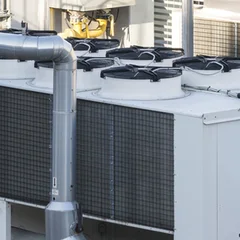
- Bring cooling into the problem: treat the chiller plant and the building’s thermal mass as a second battery, within comfort and equipment limits.
- Turn results into numbers lenders can use, and defend them: P50 and P90 outcomes, downside cases, and a reconciliation of what each site delivered against what we underwrote.
- Keep it fast and honest: tight formulations, decomposition and warm starts where solve time matters, and backtests on measured data for every model we ship.
- Lead the technical work: choose methods and tools, review the models others build, and help hire and mentor the engineers who join you.
What we’re looking for
- Depth in optimisation: a PhD or master’s in operational research, applied mathematics, power systems or control, or the equivalent from industry.
- Typically five years or more building models that run in production or drive real decisions: LP and MILP as a minimum, and stochastic, robust or chance-constrained formulations ideally.
- Experience leading technical work: setting direction, reviewing other people’s models and mentoring engineers.
- Fluent Python and a modelling layer such as Pyomo, JuMP, CVXPY or gurobipy, and a working feel for how solvers like Gurobi, HiGHS or Xpress behave.
- Probabilistic forecasting, scenario generation and reduction, Monte Carlo, and checking that a P90 really is a P90.
- Physical intuition for power and storage: MW against MWh, efficiency, degradation, ramp limits and state-of-charge constraints.
- Production habits you can set for a team: tests, code review, reproducible experiments and clean data pipelines.
- Useful but not required: GB power markets, non-firm connections and ANM, battery trading, or data centre power and cooling.
Who you might be
You might have a doctorate in stochastic optimisation or power systems, and have spent the years since building optimisers that run real assets. You might lead dispatch or trading optimisation for batteries today, work on a solver, or work on energy and capacity problems at a hyperscaler. What matters is depth: a model you built that you can defend line by line.
In your first six months
- Ship improvements to the sizing engine in your first month.
- Own the curtailment-risk model end to end: data, method, calibration and the error bars we quote.
- Run the dispatch optimiser on a live site and close the gap between plan and outcome.
- Set how we review, test and release models, and help hire the engineers who join you.
What we offer
- Salary and equity.
- Hybrid working, with remote optionality for the right candidate.
- A learning and development budget.
How to apply
Send your CV and a short note on why you’re a strong fit for this role to ka@neura.energy. Please include relevant links where useful.
We keep applications for 3 months after we receive them. If you’d like us to keep your details for 12 months so we can consider you for future roles, say so in your email. See our privacy policy.